the craft. owning your voice in traditional spaces
I remember in the early stages of querying my book receiving feedback like “the characters just weren’t relatable,” which left me with the thought, relatable to who? As an avid reader, I don’t need characters to be relatable in order to understand or enjoy the story. The question is, has the work been done to develop the character? Is there something missing in the arc? Or are they coming up a little flat or one dimensional? That would be constructive criticism. The reality is, Black and POC writers, we will always be carving out our own space in a lane that wasn’t created with us in mind.
Read More
the craft. welcome back.
First and foremost, I wanted to check in with you at the start of a new year. Thank you for your grace during our holiday break. I’m learning how to schedule rest into all this craziness and writing a weekly newsletter requires some rest in between. Although it did not quite go as planned for all the writing I hoped to get done, I’m truly learning how to go with the flow.
Read More
the craft. falling in love on the page.
I know we’re all not romance writers here, but if you would indulge me for the week. I would even say that if you’re not writing romance, you’re likely still writing about other relationships, so information here may still be applicable. But I want to talk about the work of writing two people falling in love on the page. Not easy, no matter what reputation romance writing gets, by the way. I’ll tell you who has it easy, film and TV.
Let me explain. As much as I read, I also watch a lot of films for inspiration. Real life is not always romantic so while I’m writing about two people falling in love, I like to get lost in the fairytale that is onscreen love stories. Recently while watching Nobody Wants This, I realized that having a visual helps tell the story in a way that’s harder to achieve in literature. There are longing glances, delicate touches, that don’t have to be explained because well, we see it. Writing this nuance is so much harder when you have to paint the whole picture for the reader.
Read More
the craft. the writer and the reader.
What brings us to the page initially is not often the reader, but some internal drive to tell a story. Whether it’s the story we’ve been looking for and couldn’t find, a story tied to our personal history, or if you’re like me, sometimes following a question. However, at minimum, when we decide what we want to write will be for public consumption, we know eventually there will be a reader on the other side of our words. If we’re lucky, of course. The reality is that art is a collaborative experience, and while you may not make the art with the reader in mind, we’re all having an interaction with it.
Read More
the craft. deeper with characters.
This week, as a part of our Develop Your Story campaign for the month of November, we kicked off talking about characters, and how to create depth so that they read as fully formed people within your story. I want to dig a little deeper into the real work of this and why it’s so beneficial to your storytelling to have fully fleshed out characters.
Read More
the craft. the personal essay recipe.
I came to writing for public consumption by way of personal blogging. Of course, I always had a knack for writing, but it was in the 2010-2013 time frame that blogging became a viable option for me to get some of my thoughts out into the world. I was trying to find my way. I had pivoted majors in college from Journalism to Communications, but I knew I still wanted to write, only with a bit more of my own personal spin. So outside of doing some music journalism for multiple outlets, I ventured into telling personal stories 600-800 words at a time.
Read More
the craft. what it means to be a Black or POC writer.
Have you ever thought about what it means to be a Black or POC writer? To you. Personally. Within your practice? I know I have thought about it often. Questioned even if there’s such a thing as being “too Black” in my work. Wondering exactly what it means when someone doesn’t identify with the character when I’m uncertain that’s ever been a prerequisite for my own reading. I’ve thought about the need at times to write to process the discrimination and hatred of being from a marginalized group, attempting to make sense of multiple chain of events over the last few years.
Read More
the craft. the self edit.
Recently on the PTW Podcast, I talked about working with an editor for your debut novel, detailing the experience of receiving that first edit letter which leads you to wonder what the hell you were thinking when you embarked on writing a book. But the most important thing to come from that experience, after I picked my pride up from the floor, was becoming a better editor myself.
Read More
the craft. the journey of the writer and the reader.
I love how you receive exactly what you need when you need it because I’d been thinking a lot about how I wanted to tell the story of my work in progress (WIP). You know the beautiful language is one thing but approach is a whole different part of the writing process. Things like what perspective to write in. Things like will it have a happy ending that ties up in a bow. How exactly do I want to lead into the climax? How much should I reveal early on, what should I keep for later?
Read More
the craft. who are you writing for?
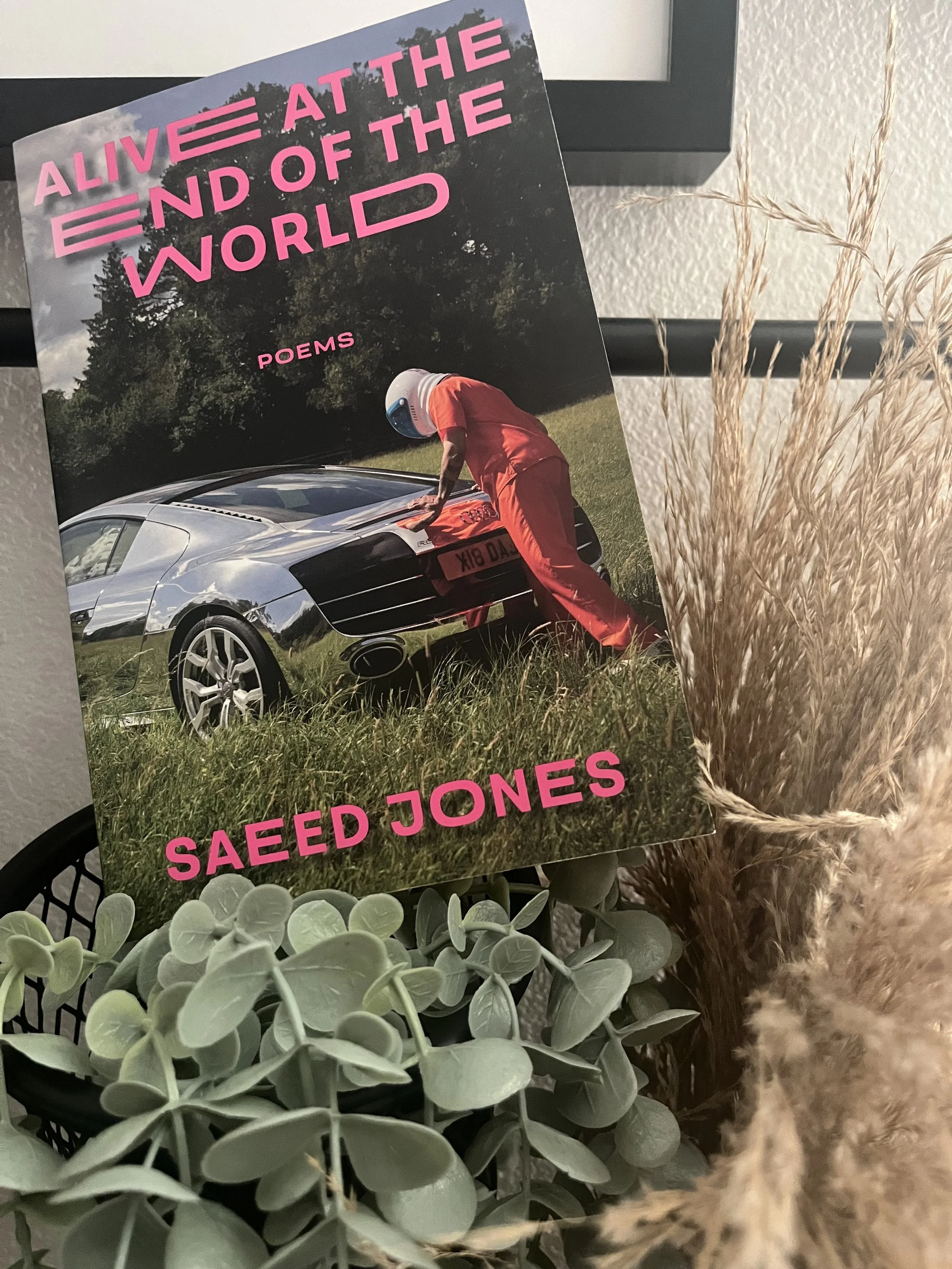
I’ve been reading through 1000 Words by Jami Attenberg and boy is it the long hug you need as a writer. Especially when you’ve been doling out a lot of the encouragement, you don’t realize how important it is to fill yourself back up. But I was struck by these two questions on P. 189.
Who are you writing this for?
What do you hope to accomplish with this work?
Read More
the craft. theme.
Themes don’t seem to get a lot of shine when we’re talking about fiction writing. We spend a lot of time on character development, plot, even point of view, but not as much time dissecting how that all comes together in the form of themes. It’s a lot more on the nose in nonfiction writing which is centered around a certain idea or theme, while in fiction, it can be a bit more subtle but still necessary for the reader. While I was poking around Free Within Ourselves, by Jewell Parker Rhodes, she had such a great definition I wanted to share.
Read More
the craft. drafting without editing.
In a conversation for the podcast, I was reminded that we all have different approaches to our work. So, I always want to remind you that when another writer shares, it’s solely about information and your work is choosing what to apply and what to throw away. I’m immensely grateful for all the data points I’ve gathered on writing, and more importantly, how to be a good writer. But ultimately, it’s all about what works for me.
Read More
the craft. to 1,000 Words or not to 1,000 Words?
You may or may not be familiar with the #1000wordsofsummer movement led by bestselling author Jami Attenberg, but it is fast approaching as writers embark on the challenge of writing 1,000 words a day for the first two weeks in June. I’d only recently picked up the book because I am feen of books on craft, but I wasn’t as familiar with the actual challenge.
Read More
the craft. the challenge of unlikable characters.
As I’ve been mulling over what I’m ready to work on next, I stumbled upon what feels like a next challenge for me. Writing an unlikeable female protagonist. I was struck by an interview I saw circulating with our literary godmother Toni Morrison, where the interviewer asks her about her female characters. He references them as rebels and trouble makers and Morrison, who is always profound, essentially says that these women make for great stories and while she wants to be friends with nice women, they’re simply not as interesting.
Read More
the craft. poetry and music.
I had a revelation this week about how much I love both music and writing. They are honestly two of the topics I could talk about for hours ad nauseum. It’s hilarious to me though that I didn’t become a music writer. It’s like I love them separately but equally. To close out our series on poetry this month, I wanted to talk about the marriage of poetry and music.
Read More
the craft. poetry is my editor.
Poetry challenges me in my own writing process. When I’m writing an initial draft of a manuscript, I’m mostly attempting to get the story out of my head onto paper. It’s not necessarily going to be this beautiful language that convinces you that I have any ability to write at all. But it’s those later drafts where things really start to come alive, and often, I’ve read some poetry in between.
Read More
the craft. poetry and activism.
I recently came across an author discussing their thought that fiction isn’t activism. I’ll put a pin in that to say, poetry definitely is and I don’t want to hear anything else about it. Maybe I don’t know the true definition of activism, but I know that poetry moves. I know that poetry unites. I know that poetry has for centuries highlighted the human condition, brought the perils of society to the forefront and has been at the helm of movements.
Read More
the craft. create space. where it fits.
Back in the day, I grappled with how to define myself as a writer. It was a combination of imposter syndrome’s “you could never” and the idea that I needed to prove myself before embracing the title. The title I struggled to accept at the time was poet. But the struggle didn't stop there; it continued with questions like, 'If I call myself a poet now, does that mean that’s all I’ll ever be?’ I already had dreams of screenwriting and had started to experiment with short stories. In my mind, I nurtured the dream— ‘I want to write everything that can be written,’ but in my heart— crickets.
Read More
the craft. poetry is.
To read how Ms. Sonia Sanchez perceives the poet, it’s no wonder poetry has always felt an intimidating genre to me. Growing up in Philadelphia, we were never short on hubs where words flowed over microphones in syncopated rhythms, sometimes over music, other times, solo straight to the ears of the audience, shooting this crafted language right into their veins.
Read More
the craft. writing the middle.
I know you may not suspect it, but I partake in watching the chaos that is Netflix’s Love is Blind. I don’t need your judgment, only your support. But hey, I’m a sucker for love stories no matter how contrived, and it’s passive watching meaning, I’m typically doing something else while I have it going in the background. However, there are a lot of elements of storytelling that this mind-numbing reality show takes into consideration.
Read More